.webp)


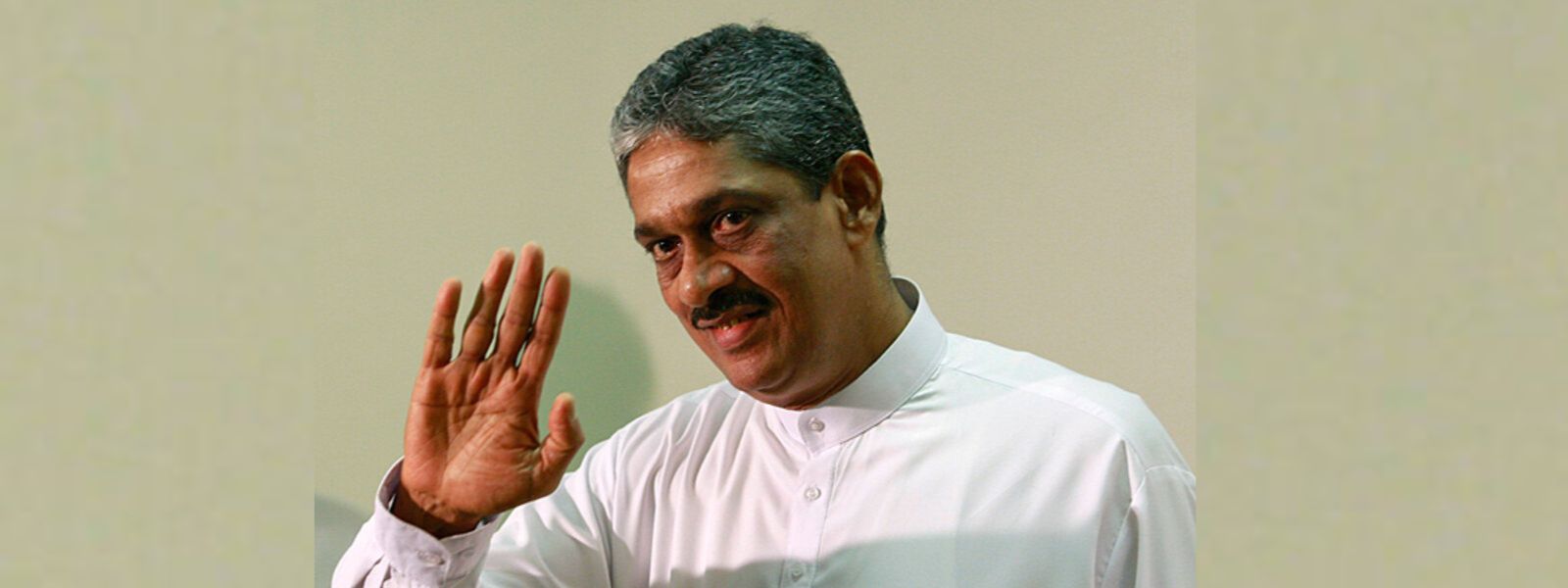
Fonseka Accuses Rajapaksas of Secret LTTE Dealings



.png )
COLOMBO (News 1st); Former Sri Lanka Army Commander Field Marshal Sarath Fonseka has made a series of explosive allegations, claiming that senior leaders, including Mahinda Rajapaksa, Gotabaya Rajapaksa, and Karannagoda, attempted to disrupt military operations as far back as 2008.
Fonseka says that in January 2008, during a Security Council meeting, the Rajapaksas presented a proposal contradicting his own battlefield strategy. At the time, he had deployed units in Weli Oya, surrounding LTTE forces from four directions. However, the trio insisted his plan was ineffective and would prolong the conflict, arguing that surrounding the enemy from multiple sides would only increase casualties.
Instead, they proposed a direct advance from Vavuniya to Mullaitivu, claiming it would end the war more quickly.
Fonseka alleges this was part of a broader effort to discourage him and derail the military campaign.
He then turns to 17 May 2009, the eve of the war's end. Fonseka says that although he was in China at the time, he continued issuing orders to Colombo using secure communications.
However, he claims he was not informed of a critical discussion that took place that morning.
According to Fonseka, a call, featured in the video he references, came from the Defence Secretary to Shavendra Silva, and the Defence Secretary allegedly spoke directly.
The discussion reportedly involved the ICRC mission, Amnesty International representatives, and members of another organisation.
He alleges that later, Basil Rajapaksa, Mahinda Rajapaksa, and Gotabaya Rajapaksa discussed offering LTTE leaders a chance to surrender. Fonseka insists this went against his explicit orders: the LTTE was to be entirely defeated, with no backdoor escape routes or negotiations.
By the evening of 16 May, Fonseka says the LTTE was trapped within 400‑metre pockets north of Mullaitivu, across Vellamullivaikkal and the Nadikadal lagoon area. He claims everyone knew the LTTE’s defeat was imminent.
Yet despite this, Fonseka alleges the Rajapaksas initiated discussions to allow LTTE leaders to surrender to a third party, since the LTTE refused to surrender directly to the Army. He says they were prepared to accept such a surrender and spare the lives of top LTTE figures.
Calling this the “poison seed” in the Rajapaksas’ minds on 17 May, Fonseka claims that had their plan gone through, Prabhakaran, Soosai, Pottu Amman, his wife, Colonel Thileepan, and others, such as Ramesh and LTTE cadres who fled the East, would still be alive.
Fonseka argues that Mahinda Rajapaksa attempted to save their lives on 17 May, a claim he says the public must understand.
He also accuses certain media personnel of fabricating the now‑famous “white flag” narrative, alleging that they twisted events to claim he ordered the Army to fire on surrendering LTTE members.
Fonseka concludes by insisting that the entire “white flag surrender” storyline was manufactured and used against him, turning the narrative into “something completely different” from what occurred.
Other Articles


 (1) (1)-852279_550x300.jpg)






Featured News


-849213_550x300.jpg)
News 1st, MTV Channel (Pvt) Ltd, MBC Networks (Pvt) Ltd, 45/3, Braybrooke Street, Colombo-02.
T.P : +94 114 792 700, Fax : +94 114 792 733
T.P : +94 114 792 700, Fax : +94 114 792 733




 |  | .webp) |
|---|---|---|
 |  |  |
 |  |  |
 |
