.webp)


Growth and Stability Return to Sri Lanka’s Economy



.png )
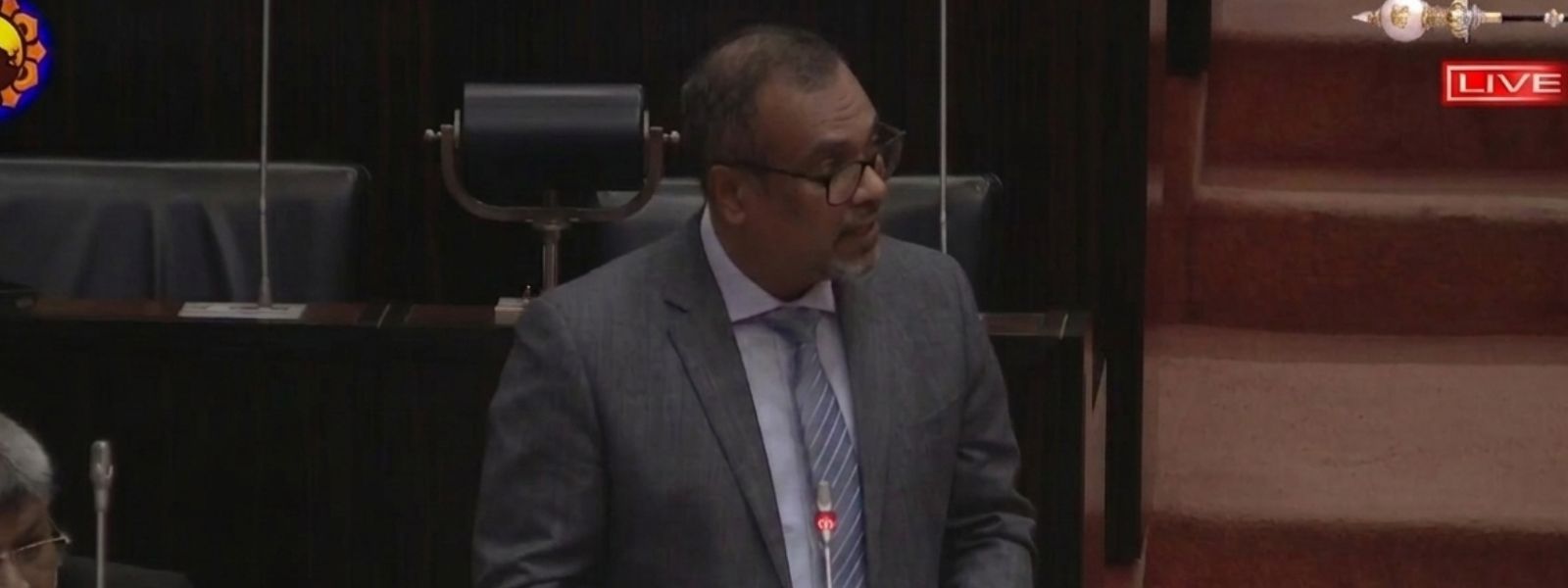
COLOMBO (News 1st); Deputy Minister of Finance, Dr. Anil Jayantha Fernando, says Sri Lanka has made significant progress in restoring public financial stability following the economic crisis, while steering the country toward sustained growth through disciplined fiscal management.
He stated that the primary objectives of the government’s fiscal strategy include rebuilding public financial stability, ensuring debt sustainability, improving government revenue, managing expenditure prudently, and promoting public investments necessary for economic growth. As a result of these measures, Sri Lanka maintained a strong economic growth rate of 5% in 2025.
Dr. Jayantha noted that government revenue was also successfully maintained at 16.7% of Gross Domestic Product (GDP). These achievements were recorded despite adverse impacts from the Ditwah cyclone situation, the ongoing crisis in the Middle East, and broader global and domestic challenges.
He emphasized that the government’s resilience, policy direction, and strong governance framework played a decisive role in navigating these challenges.
In response to damage caused by the cyclone, the government allocated an additional Rs. 500 billion for 2026 to support recovery and rehabilitation efforts, particularly for affected communities.
To cushion the economic impact of the Middle East crisis, the government has also implemented a Rs. 100 billion financial relief package, with swift measures taken to ensure its execution.
Despite these challenges, Sri Lanka recorded a 5.1% economic growth in the first quarter of 2026, while inflation was brought under control at 5.5% by May.
The country’s gross official reserves reached USD 6.8 billion by May, reflecting improved macroeconomic stability.
Additionally, worker remittances rose sharply by 26% compared to the first five months of the previous year, further strengthening foreign exchange inflows and confidence among the overseas Sri Lankan community.
The Deputy Minister highlighted that in 2025, Sri Lanka achieved a historic primary surplus of 5.4% of GDP, the highest in its history, which contributed to a reduction in the public debt ratio compared to 2024. He described this as clear evidence of the success of ongoing fiscal consolidation efforts.
Continuing this momentum, total government revenue from January to May 2026 increased by 30.6% compared to the same period last year.
By the end of May, total revenue had reached Rs. 2,536.8 billion, with the Inland Revenue Department contributing Rs. 1,096 billion and Sri Lanka Customs generating Rs. 1,079 billion.
Strict expenditure management has also improved fiscal discipline, enabling the government to record a budget surplus of Rs. 197.4 billion during the first five months of 2026, surpassing the targeted surplus by Rs. 113.1 billion.
Looking ahead, Professor Jayantha said the 2027 fiscal strategy statement outlines key targets aimed at maintaining long-term fiscal stability.
These include reducing public debt to 95% of GDP by 2031, maintaining a primary surplus of at least 2.6% of GDP from 2027, and sustaining government revenue above 15% of GDP.
The government also plans to keep primary expenditure at 13% of GDP in 2027, equivalent to Rs. 5,064 billion, while ensuring public investment remains at 4.4% of GDP.
Additionally, efforts will be made to maintain the budget deficit below 5% of GDP over the medium term.
He stressed that the fiscal strategy aims to ensure debt sustainability, strengthen fiscal discipline, enhance transparency and accountability, and secure long-term economic stability, while safeguarding future generations from financial burdens through a robust medium-term fiscal framework.
Other Articles






Featured News




News 1st, MTV Channel (Pvt) Ltd, MBC Networks (Pvt) Ltd, 45/3, Braybrooke Street, Colombo-02.
T.P : +94 114 792 700, Fax : +94 114 792 733
T.P : +94 114 792 700, Fax : +94 114 792 733




 |  | .webp) |
|---|---|---|
 |  |  |
 |  |  |
 |
