.webp)


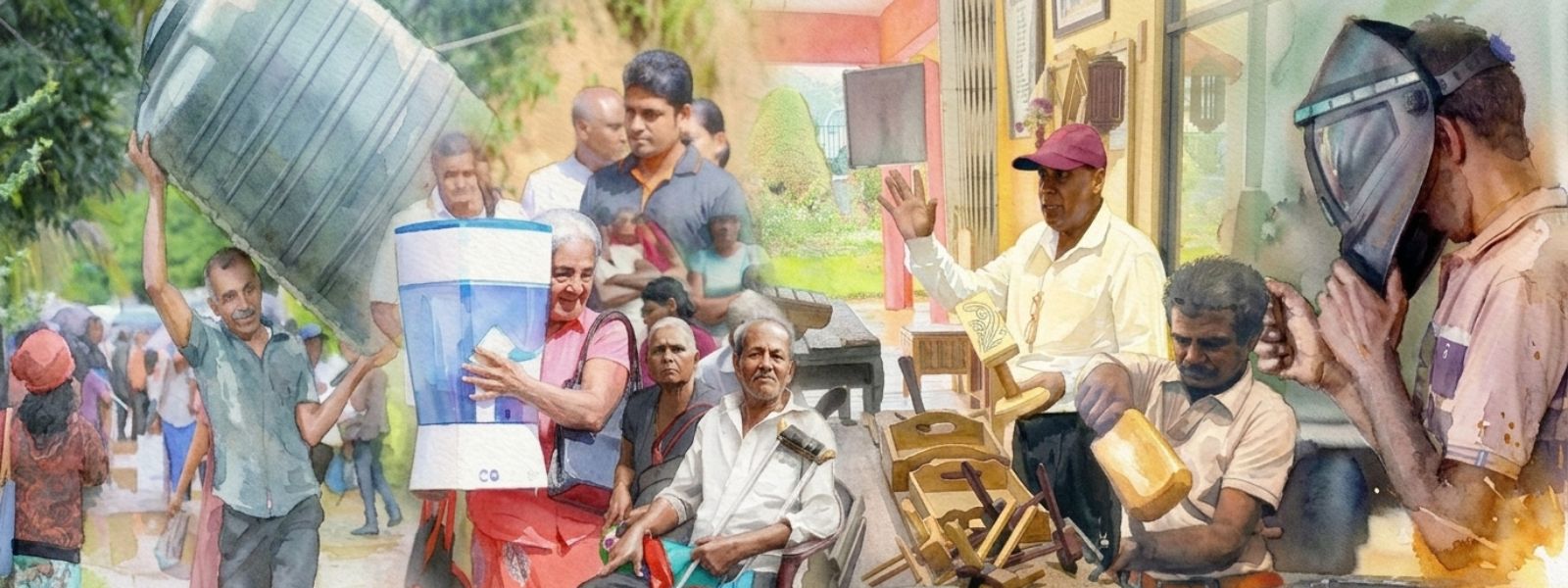
How Gammadda Never Gave Up on Ditwah’s Victims: A Movement That Is Rebuilding A Nation



.png )
COLOMBO (News 1st); On a rain-dark night in late November, an invisible line crossed Sri Lanka’s southern waters and set destiny in motion. What began as a low-pressure patch on November 25 hardened into a deep depression two days later, and then into a full-blown cyclone named Ditwah. By the time the storm slammed ashore at Pottuvil, it had already done what storms do best: unmake lives, tear roofs away, and leave silence where laughter lived.
The official numbers were merciless: roughly 500 lives lost, nearly 400 missing, whole villages carried away by water and earth. Yet the human story of Ditwah is not only about statistics. It is about how ordinary people and a handful of determined organisations refused to let those numbers become the final chapter.
News 1st was there before the storm. The newsroom that normally delivers sports and politics rewired itself into an emergency lifeline , halting its regular schedule, running continuous verified updates, and warning communities ahead of impact. Broadcasting warnings, clarifying scientific forecasts, and keeping the country awake to danger, they became part of the front line.
When the waters receded, the work broadened from reporting to response. Gammadda, the sprawling volunteer movement known for walking into hard places and staying, rose to meet the catastrophe. Their teams went everywhere, by road, by boat, by air , delivering aid, mapping destruction, and refusing to accept that anyone could be left uncounted.
Relief came with urgency and inventiveness. Ships and trucks carried supplies; rescue teams threaded flooded lanes; an American C-130 airlift bolstered “Sirasa-Shakthi Sahana Yathra” relief voyages that pushed assistance into places roads could not reach. From the skies and ports to the smallest hamlet, volunteers carried blankets, medicine, food, and, most importantly, attention.
Gammadda’s relief effort was not a one-day headline. Volunteers returned again and again, working through mud and heat, rebuilding homes, restoring wells, and hauling away ruined belongings. They set up systems to trace missing people, to document damage, and to create a public record so that loss would not be erased by time.
The movement’s rebuild program, Gammadda Care & Dare, became a promise: re-house the homeless, reestablish livelihoods, reconnect communities. International solidarity amplified local strength. Australia’s Minderoo Foundation joined hands with Sri Lanka's Gammadda, turning small donations into roofing sheets, tools, and the labour that puts a roof back above a child’s head.
For those who survived Ditwah, rebuilding was not only physical. It was the careful work of restoring dignity. Teams sat with grieving families, helped arrange legal documentation, and pushed local government to act. News 1st continued to hold the story in the public eye. The result was a partnership bringing multiple sectors together, working in sync.
Months after the storm left the island, the urgency faded from international feeds. But for the families who lost homes and loved ones, recovery was a daily grind. Gammadda did the unglamorous work, patching, dredging, teaching farmers how to salvage damaged crops, that turned despair into movement. Villages that had been emptied started to fill again. Markets reopened. Schools took back their classrooms.
Ditwah’s toll is still counted in empty chairs. Yet the story that will endure is how communities refused to be defined by what they lost. Gammadda walked into flooded fields and collapsed houses with shovels in hand and songs on their lips. News 1st kept the lens trained on the survivors, while international partners supplied lift and funds. Together they changed the arc of recovery from scattershot relief to organised rebuild.
This is the lesson that matters beyond any single storm: when institutions report and volunteers show up , persistently, patiently, and publicly , recovery becomes less about charity and more about shared responsibility. Gammadda did not just repair roofs. It helped stitch back the social fabric a cyclone had torn.
As Sri Lanka continues to confront climate risks, the Ditwah response by Gammmadda, supported by Australia's Minderoo Foundation, stands as a blueprint. Advance warnings, continuous verified reporting, volunteer networks ready to mobilise, and international support can turn catastrophe into a recovery pathway. Most important is the human truth Gammadda showed: communities that stand up for each other do more than rebuild houses; they mend hope.
Other Articles
-843482_550x300.jpg)
-843468_550x300.jpg)





Featured News


-835300_550x300.jpg)
News 1st, MTV Channel (Pvt) Ltd, MBC Networks (Pvt) Ltd, 45/3, Braybrooke Street, Colombo-02.
T.P : +94 114 792 700, Fax : +94 114 792 733
T.P : +94 114 792 700, Fax : +94 114 792 733




 |  | .webp) |
|---|---|---|
 |  |  |
 |  |  |
 |
